
In June 2021, two H&M stores in Berlin printed words of self-love onto clothes that customers brought from home. The prints came from artist and writer Mirjam Grupp. Around them she led three free self-love workshops, all fully booked, and part of the proceeds went to the victim support organization Weißer Ring. This article explains how the project worked, why the placement of a word on the body matters, and what research says about self-love, supportive touch and giving clothes a second life.
Self-Love to Wear was a 2021 collaboration between artist Mirjam Grupp and H&M Germany. In two Berlin stores, customers could have their own garments printed for free with phrases like I'VE GOT MY BACK. The project added three free self-love workshops and a donation to Weißer Ring, making self-love tools available to people who might not afford them.
In brief
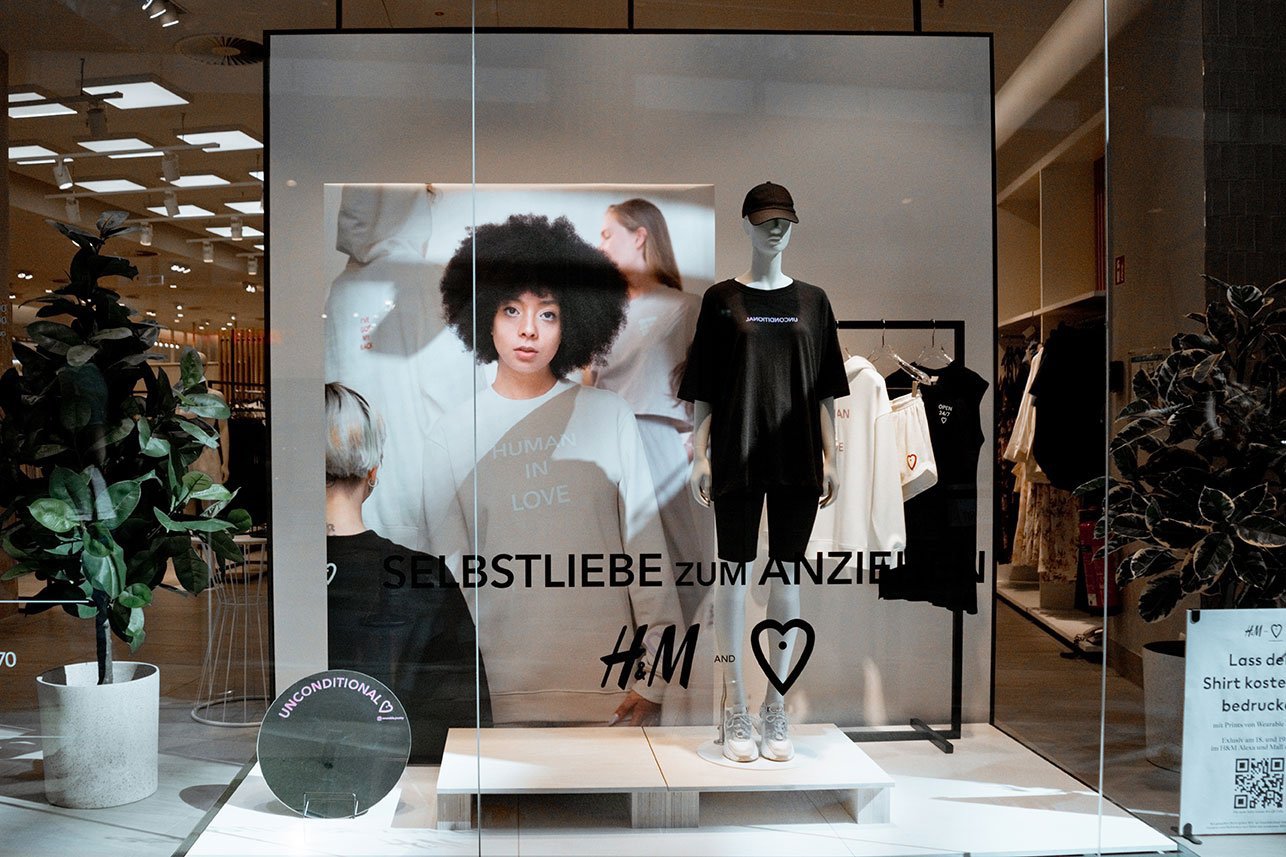
Self-Love to Wear ran on 18 and 19 June 2021 at H&M Alexa and H&M Mall of Berlin.
Customers brought their own garments and had them printed for free with Mirjam Grupp's self-love phrases.
The prints included I'VE GOT MY BACK, LEAN ON ME, UNCONDITIONAL and OPEN 24/7.
Mirjam Grupp places words where they belong on the body: I'VE GOT MY BACK sits between the shoulder blades.
She led three free self-love workshops, all fully booked, so the project reached people who cannot pay for self-help tools.
H&M donated part of the proceeds from garments bought for printing to Weißer Ring, Germany's largest organization supporting victims of crime.
Printing on existing clothes gave garments a second life instead of adding new ones.
The partners met through the Industry Disruptor programme initiated by UN Women.
Mirjam's vision for the project: a "glowing army of self-lovers".
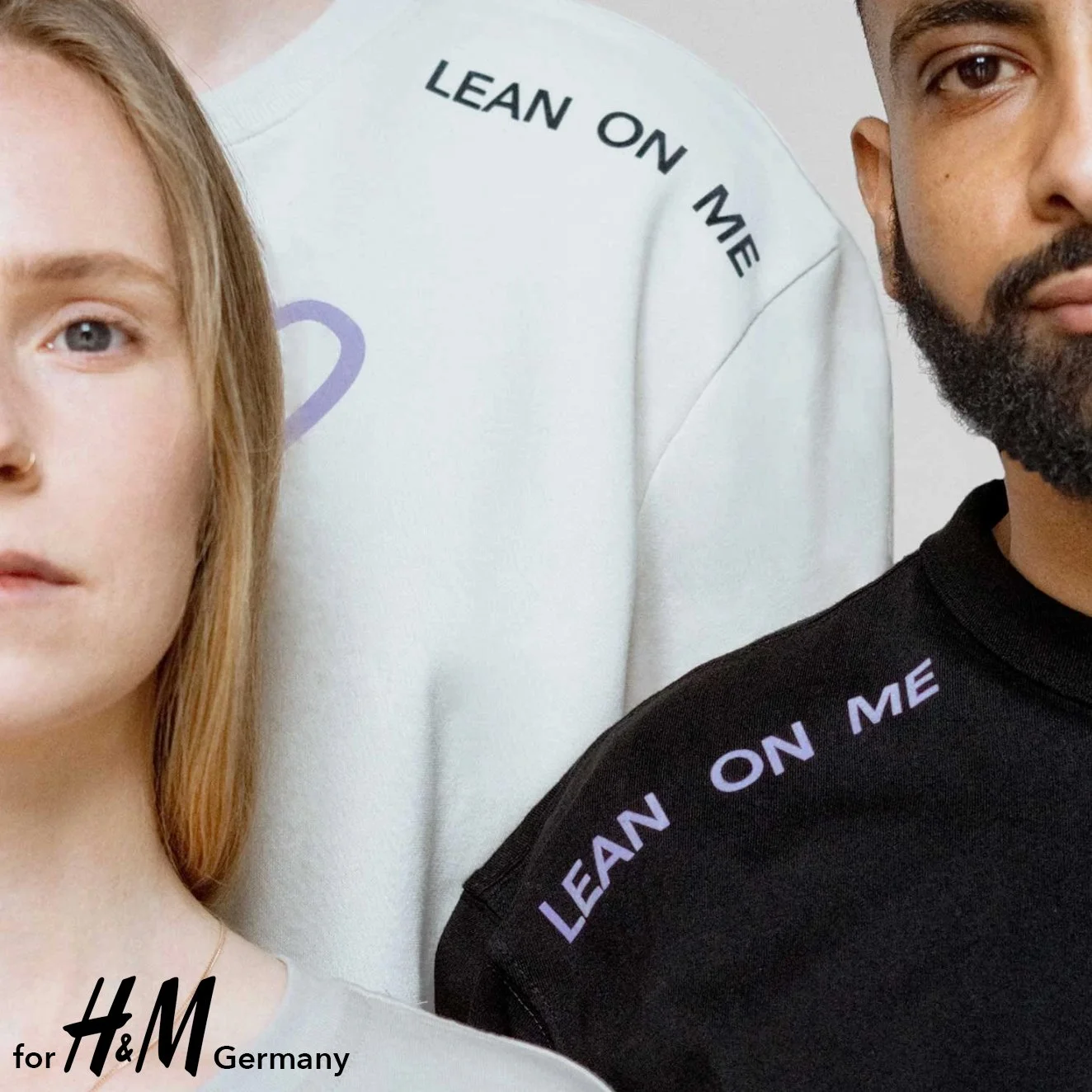
Table of contents
What was Self-Love to Wear?
Why does Mirjam Grupp write on garments?
Where on the body should a word sit?
Why does self-love need an everyday reminder?
How did the project make self-love accessible?
Why print on clothes people already own?
How did the project give back to the community?
What does a brand gain from working with an artist?
How did Mirjam Grupp and H&M meet?
What does a "glowing army of self-lovers" mean?
How to wear self-love in your own life, step by step
FAQ
1. What was Self-Love to Wear?
Short answer: Self-Love to Wear was an initiative by artist Mirjam Grupp and H&M Germany in June 2021. In two Berlin stores, customers could have garments printed for free with self-love phrases. The project combined the prints with free self-love workshops, upcycling of existing clothes, and a donation to the victim support organization Weißer Ring.
At the time, Mirjam Grupp was a writer based in Berlin, and her work, formerly known as Wearable Poetry, is today called word*magic. Her medium is language: short phrases placed on garments and everyday objects.
The key facts, as reported by Fizzy Magazine in June 2021:
| Dates | 18 and 19 June 2021 |
| Places | H&M Alexa (18 June) and H&M Mall of Berlin (19 June), with Mirjam Grupp in store |
| Prints | I'VE GOT MY BACK, LEAN ON ME, UNCONDITIONAL, OPEN 24/7 |
| How it worked | Customers brought their own garments (more than 50% cotton) and had them printed for free |
| Workshops | Three free self-love workshops led by Mirjam Grupp, built around the prints, all fully booked |
| Donation | 50% of the value of garments bought for printing went to Weißer Ring e.V. |
Mirjam is clear that the project was about more than the prints. In her words: "This project is much more than the prints."
In short: Self-Love to Wear brought Mirjam Grupp's words into two H&M stores and combined them with free workshops, upcycling and a donation.
2. Why does Mirjam Grupp write on garments?
Mirjam Grupp writes on garments because clothes represent our bodies. A word on fabric is not just read. It is worn, carried and felt in a specific place. She believes that a garment combined with the right words can support personal transformation by keeping a reminder close to the person all day.
For Mirjam, a garment is different from a poster or a book page. It sits on the body. It moves with you, and it touches you. That makes the body part of the message.
She describes her conviction this way: fashion, a garment, together with the right words "has the power to assist us in our personal transformation."
At the time of the launch, she said: "I strongly believe that fashion can help us to feel good with who we are" (Fizzy Magazine). Her aim is to connect sustainable fashion with emotional sustainability: care for your inner life that lasts beyond a single good moment.
In short: for Mirjam Grupp, clothes are the most personal place for words, because they are worn on the body and carried through the day.
3. Where on the body should a word sit?
Short answer: Mirjam Grupp places each phrase where its meaning lives on the body. I'VE GOT MY BACK sits between the shoulder blades, where support is felt. LEAN ON ME sits on the shoulder, the place you offer a friend. The position turns a phrase from a statement into a gesture.
This is the most distinctive idea in Mirjam's work. A word means more when its place on the body matches its meaning. As she explains, I'VE GOT MY BACK is "most helpful if it's placed between my shoulder blades."
| Phrase | Placement | What the placement adds |
|---|---|---|
| I'VE GOT MY BACK | Between the shoulder blades | The words sit exactly where you would feel a supportive hand |
| LEAN ON ME | On the shoulder | The shoulder becomes an offer to a friend |
| UNCONDITIONAL | Chosen by the wearer | A reminder that self-support needs no conditions |
| OPEN 24/7 | Chosen by the wearer | Self-support is always available, day and night |
What research says about supportive touch
No study has tested where printed words should sit. But research on touch points in the same direction. In a 2021 randomized controlled trial with 159 participants, people who placed a hand on their own body, most often on the heart and abdomen, for 20 seconds before a stress test showed lower cortisol responses than a control group. The effect was similar to receiving a hug (Dreisoerner et al., Comprehensive Psychoneuroendocrinology, 2021; PsyPost summary). Cortisol is a hormone the body releases under stress.
Good to know: this research is about real touch, not about clothing. It suggests the body responds to gestures of support. A phrase placed where support is felt borrows from that gesture symbolically. It does not replace a hand on the heart.
In short: the place a word sits on the body is part of its message. Mirjam Grupp designs the placement, not only the words.
4. Why does self-love need an everyday reminder?
Short answer: Self-love is easy to understand and hard to remember in difficult moments. Mirjam Grupp sees a worn phrase as a small reminder that helps you return to a place where you support yourself without conditions. Research on self-compassion shows that practising kindness toward yourself can reduce stress and depressive symptoms.
Mirjam describes the function of her prints simply. If you have this little reminder with you, "it helps you to go back to a place where you support yourself without conditions."
Self-love and self-compassion: what is the difference?
Self-love is the everyday term for treating yourself with care, respect and acceptance.
Self-compassion is the term used in research. It describes a healthy way of relating to yourself, motivated by a wish to help rather than harm (Ferrari et al., Mindfulness, 2019).
What the research shows
A 2019 meta-analysis of 27 randomized controlled trials found that self-compassion interventions improved a range of outcomes, with moderate effects on self-compassion, stress and depression (Ferrari et al., 2019). A larger 2023 meta-analysis of 56 trials found small to medium effects on depressive symptoms, anxiety and stress (Han and Kim, Mindfulness, 2023).
These studies tested structured practices, not clothing. A worn phrase is not therapy. Its role is smaller and practical: it brings you back to the practice in ordinary moments.
Warning: self-love reminders support well-being, but they do not replace professional help. If you are struggling, talk to a doctor or a mental health professional.
In short: self-love works through practice, and practice needs reminders. A phrase you wear keeps that reminder with you.
5. How did the project make self-love accessible?
Short answer: Many self-help and self-love tools cost money. By placing the prints and free workshops directly in H&M stores, Self-Love to Wear reached people who might not afford coaching, courses or retreats. Mirjam Grupp saw the store as a place to meet people where they already are.
Case study: self-love in a shopping mall
The problem. Mirjam had noticed a gap. As she puts it, there are many self-help and self-love techniques, "but a lot of them cost money." The people who might need support most are often the ones who cannot pay for it.
The approach. Together with H&M, she moved self-love into a place almost everyone visits: a high-street store. Alongside the free prints, she led three free workshops on self-love, built around the meaning of the phrases.
The result. All three workshops were fully booked. The project could reach people "who might not be able to afford all of these tools," and offer them something for free. For Mirjam, the partnership also meant reach: it helped her "put the message out there," reach more people and create more impact.
What it shows. Access matters as much as content. A message about self-love only helps the people it reaches.
Remember: the most valuable part of Self-Love to Wear was free: the printing and the workshops.
In short: by bringing self-love into a store and making it free, the project removed the cost barrier that keeps many people from support.
6. Why print on clothes people already own?
Short answer: Self-Love to Wear printed on garments customers brought from home, instead of selling only new ones. This gave clothes a second life with a new message. It matters because Europeans consume around 19 kg of textiles per person each year, and most textile waste is not collected for reuse or recycling.
Customers could bring their own favourite garments and, as Oliver Lange, Head of H&M Beyond, put it in the campaign video, "bring them to a new life with just putting a new message on it." This is upcycling: giving an existing item new value instead of replacing it.
The numbers show why this matters. According to the European Environment Agency (EEA), the average EU citizen consumed 19 kg of clothing, footwear and household textiles in 2022, up from 17 kg in 2019 (EU Textiles Ecosystem Platform). The EEA also estimates that around 16 kg of textile waste per person was generated in the EU in 2020, and only about a quarter was collected separately for reuse and recycling (EEA).
The EEA names circular business models, which extend the life of textiles, as one way to reduce their environmental impact (EEA). A new print on an old shirt is a small, concrete example.
It also connects to Mirjam's idea of emotional sustainability. A garment you already love, now carrying a message for you, is more likely to be kept and worn.
In short: printing on existing clothes kept garments in use and added personal meaning, without producing new ones.
7. How did the project give back to the community?
Short answer: H&M Germany donated 50% of the value of garments bought for printing during the event to Weißer Ring e.V. Weißer Ring is Germany's largest organization supporting victims of crime, founded in 1976 in Mainz. The donation linked self-love to concrete help for people in crisis.
Marcel Kuch, H&M Area Manager Berlin, explained the intention: the team wanted something that involved customers and did "local benefits to our community." The donation was the answer (Fizzy Magazine).
Who is Weißer Ring?
Founded on 24 September 1976 in Mainz, Germany.
Germany's largest organization supporting victims of crime, with around 43,000 members.
Around 400 local branches and roughly 2,800 trained volunteers (all figures: Weißer Ring, data and facts, 2022).
It runs a free victim helpline in Germany: 116 006 (Verbandsbüro).
The choice fits the theme. Self-love includes the right to be safe, and Weißer Ring supports people whose safety has been violated.
In short: each garment bought for printing also supported victims of crime in Germany.
8. What does a brand gain from working with an artist?
Short answer: In this collaboration, H&M offered a platform and reach to many people. In return, the brand received, in the words of H&M Area Manager Michael Hafner, diversity, new points of view, new energy and inspiration. The artist gained visibility and impact for her message. Both sides contributed something the other could not create alone.
Oliver Lange, Head of H&M Beyond, was direct about what drew him to the project: "I was inspired by the creativity that Mirjam brought." Michael Hafner, H&M Area Manager Berlin, described Mirjam's approach as "a business idea that goes far beyond only being profitable," one that fitted the company's values.
| What they gave | What they received | |
|---|---|---|
| H&M Germany | Platform, store space, reach to many customers | Diversity, new points of view, new energy, inspiration, community engagement |
| Mirjam Grupp | Prints, workshops, a clear message about self-love | Visibility, a wider audience, more impact |
| Customers | Their own garments, their time | Free prints, free workshops, a reminder to keep |
Good to know: a partnership like this works when the artist's message stays intact. Here, the core of the project, free self-love support, was not a product to sell.
In short: the collaboration worked because each partner brought what the other lacked: reach on one side, meaning on the other.
9. How did Mirjam Grupp and H&M meet?
Short answer: Mirjam Grupp and H&M Germany met through Industry Disruptor, an incubator initiated by UN Women and WeEmpowerAsia and organized by the DO School. The programme connects female fashion entrepreneurs with established companies. Mirjam's work was selected for it, and the H&M collaboration grew from there.
According to Fizzy Magazine, the Industry Disruptor programme brings female founders in fashion together with large companies. For Mirjam, it opened the door to a partner with national reach.
In short: the collaboration started in a UN Women-initiated programme for female fashion entrepreneurs.
10. What does a "glowing army of self-lovers" mean?
Short answer: Mirjam Grupp imagines a world where many people wear their self-love visibly, like a glowing army. It is why she always works with glow-in-the-dark material: the words keep shining when it gets dark. Her image expresses a simple belief: if more people supported themselves without conditions, the world would be a better place.
In her words: "if we would be a glowing army of self-lovers, I think the world would be a very good place."
The image works on two levels. Literally, glow-in-the-dark ink keeps the message visible at night. Symbolically, a person who supports themselves becomes a source of light for others, like the shoulder in LEAN ON ME.
In short: for Mirjam Grupp, self-love is not private only. Worn visibly, it can spread.
11. How to wear self-love in your own life, step by step
Short answer: Choose one phrase that describes the support you need, decide where on your body it belongs, and put it on a garment you already love. Wear it on days you need it most, and connect it to a small daily practice, such as a hand on the heart. Replace the phrase when your needs change.
Name what you need. Support, patience, permission, rest?
Choose a short phrase. For example: I'VE GOT MY BACK, UNCONDITIONAL, OPEN 24/7.
Choose the place. Where on your body would that support be felt? Back, shoulder, chest, wrist.
Use what you have. A favourite shirt or jacket gives the message a home without buying new.
Wear it with intention. Notice the words when you get dressed.
Add a gesture. A hand on your heart for a few breaths, inspired by the research on supportive touch.
Renew it. When the words stop speaking to you, choose new ones.
Checklist
My phrase names a real need
It is short and easy to read
Its place on my body matches its meaning
It is on something I already love and wear
I have a small daily gesture to go with it
Most common mistakes
Choosing words you cannot believe yet. Pick a phrase that feels possible, not forced.
Ignoring placement. A phrase on the back feels different from one on the chest. Choose on purpose.
Buying new when you do not need to. Upcycling an existing garment keeps the message and the planet in mind.
Treating the shirt as the whole practice. The words remind you. The practice is how you treat yourself.
Most common myths
| Myth | Reality |
|---|---|
| Self-love is selfish | Self-compassion research describes a way of relating to yourself that helps rather than harms; it is linked to lower stress |
| Self-love needs expensive tools | Self-Love to Wear offered prints and workshops for free |
| Upcycling is only for crafty people | In this project, customers only brought a garment; the printing was done for them |
| Brand collaborations are only marketing | This one included free workshops and a donation to victims of crime |
In short: a phrase, a place on the body, a garment you love and a small daily gesture are enough to start.
FAQ
What was the H&M self-love collaboration with Mirjam Grupp?
Self-Love to Wear was a 2021 initiative by artist Mirjam Grupp and H&M Germany. On 18 and 19 June 2021, customers at H&M Alexa and H&M Mall of Berlin could have their own garments printed for free with self-love phrases such as I'VE GOT MY BACK, LEAN ON ME, UNCONDITIONAL and OPEN 24/7. Mirjam was in the stores in person. The project also included three free self-love workshops, all fully booked, and a donation to Weißer Ring, Germany's largest organization supporting victims of crime.
Who is Mirjam Grupp?
Mirjam Grupp is a transformational artist and writer and the founder of word*magic and the brand _bymirjam. She worked as a screenwriter for more than 11 years before she began placing short, meaningful phrases on garments and everyday objects. Her work, formerly known as Wearable Poetry, is today word*magic bymirjam. Her pieces are designed to help people support themselves in everyday life. She has also facilitated workshops and retreats on self-love and personal change.
Why does Mirjam Grupp put words on clothes?
Mirjam Grupp puts words on clothes because, in her experience, real transformation happens in everyday life, not in a single workshop or moment. For that, people need reminders of who they have decided to be and how they want to feel. A post-it on the fridge cannot come along to work, but a garment can: you simply wear your reminder. Clothes also represent the body, so a phrase on fabric is felt in a specific place. Mirjam chooses meaningful words instead of empty slogans, so each phrase brings the wearer back to a place of unconditional self-support. And the words may connect people not only to themselves but to others, too, when others see what they are wearing.
Why does the placement of words on clothing matter?
In Mirjam Grupp's work, the place a phrase sits on the body is part of its meaning. I'VE GOT MY BACK sits between the shoulder blades, where you would feel a supportive hand. LEAN ON ME sits on the shoulder, the place you offer a friend. No study has tested printed words, but research on supportive touch suggests the body responds to gestures of support. A 2021 trial found that placing a hand on one's own body before a stress test lowered cortisol responses.
What is the difference between self-love and self-compassion?
Self-love is the everyday word for treating yourself with care, respect and acceptance. Self-compassion is the term used in psychology research. It describes a healthy way of relating to yourself, motivated by a wish to help rather than harm. A 2019 meta-analysis of 27 randomized controlled trials found that self-compassion interventions had moderate effects on stress and depression. Mirjam Grupp's prints use everyday language, but their aim matches this research: unconditional support for yourself.
Is self-love selfish?
No. In research, self-compassion means relating to yourself in a way that helps rather than harms, and it is linked to lower stress and fewer depressive symptoms. Treating yourself with care does not take anything away from others. Mirjam Grupp's own image makes the point: LEAN ON ME is placed on the shoulder you offer a friend. People who can support themselves are often better able to support others, too.
Were the workshops really free?
Yes. Mirjam Grupp led three free self-love workshops, and all three were fully booked. Free access was central to the project. Mirjam Grupp had noticed that many self-help and self-love techniques cost money, which excludes people who might need them most. By offering the workshops for free in connection with the H&M stores, the project could reach people who might not be able to afford courses, coaching or retreats. The printing of customers' own garments was free as well.
How did the donation to Weißer Ring work?
According to a 2021 report by Fizzy Magazine, H&M Germany donated 50% of the value of garments bought for printing during the event to Weißer Ring e.V. Weißer Ring was founded in 1976 in Mainz and is Germany's largest organization supporting victims of crime, with around 400 local branches and thousands of trained volunteers. The donation linked the self-love message to concrete help for people whose safety had been violated.
What is upcycling, and how was it part of the project?
Upcycling means giving an existing item new value instead of replacing it. In Self-Love to Wear, customers brought garments they already owned, with more than 50% cotton, and had them printed for free with a new message. This kept clothes in use. It matters because, according to the European Environment Agency, the average EU citizen consumed 19 kg of textiles in 2022, and only about a quarter of textile waste is collected separately for reuse and recycling.
What did H&M gain from the collaboration?
According to Michael Hafner, H&M Area Manager Berlin, the brand offered a platform and reach to many people. In return, it received diversity, new points of view, new energy and inspiration. The project also involved customers directly and created a local benefit for the community through the donation. He described Mirjam Grupp's idea as a business that goes far beyond only being profitable, which fitted the company's values.
How did Mirjam Grupp and H&M start working together?
They met through Industry Disruptor, an incubator initiated by UN Women and WeEmpowerAsia and organized by the DO School. The programme connects female fashion entrepreneurs with established companies. Mirjam Grupp's work was part of it, and the collaboration with H&M Germany grew out of that connection. The result was Self-Love to Wear in June 2021.
What does "a glowing army of self-lovers" mean?
It is Mirjam Grupp's image for the change she hopes her work can create. She imagines many people wearing their self-love visibly, which is why she always works with glow-in-the-dark material: the words keep shining when it gets dark. In her words, if we were a glowing army of self-lovers, the world would be a very good place. The image suggests that self-love, once visible, can spread from person to person.
Summary, CTA and author bio
Summary
Self-Love to Wear was a 2021 collaboration between artist Mirjam Grupp and H&M Germany. In two Berlin stores, customers had their own garments printed for free with phrases like I'VE GOT MY BACK, placed where their meaning lives on the body. Mirjam led three free, fully booked self-love workshops to reach people who cannot pay for self-help tools, and H&M donated to the victim support organization Weißer Ring. Research on self-compassion and supportive touch helps explain why such reminders matter, and printing on existing clothes kept garments in use. The project showed that a brand partnership can carry a message of unconditional self-support to many people.
CTA
If a phrase from this project speaks to you, explore Mirjam Grupp's word*magic pieces at bymirjam.com. Follow the weekly Atelier Talks on Instagram @_bymirjam for the stories behind each print. Brands interested in a collaboration with meaning can contact Mirjam directly through her website.
About the author
Mirjam Grupp is a transformational artist and writer and the founder of word*magic and the brand _bymirjam. Before her art practice, she wrote more than 70 screenplays for German television series over more than 11 years. She places concise, transformative phrases on prints, garments, pillows, mirrors and everyday objects. Her work was selected for the UN Women Fashion Industry Disruptor programme, and in 2021 she created the collaboration Self-Love to Wear with H&M Germany. She is mainly based in Portugal.